

Meet the NSW mentors
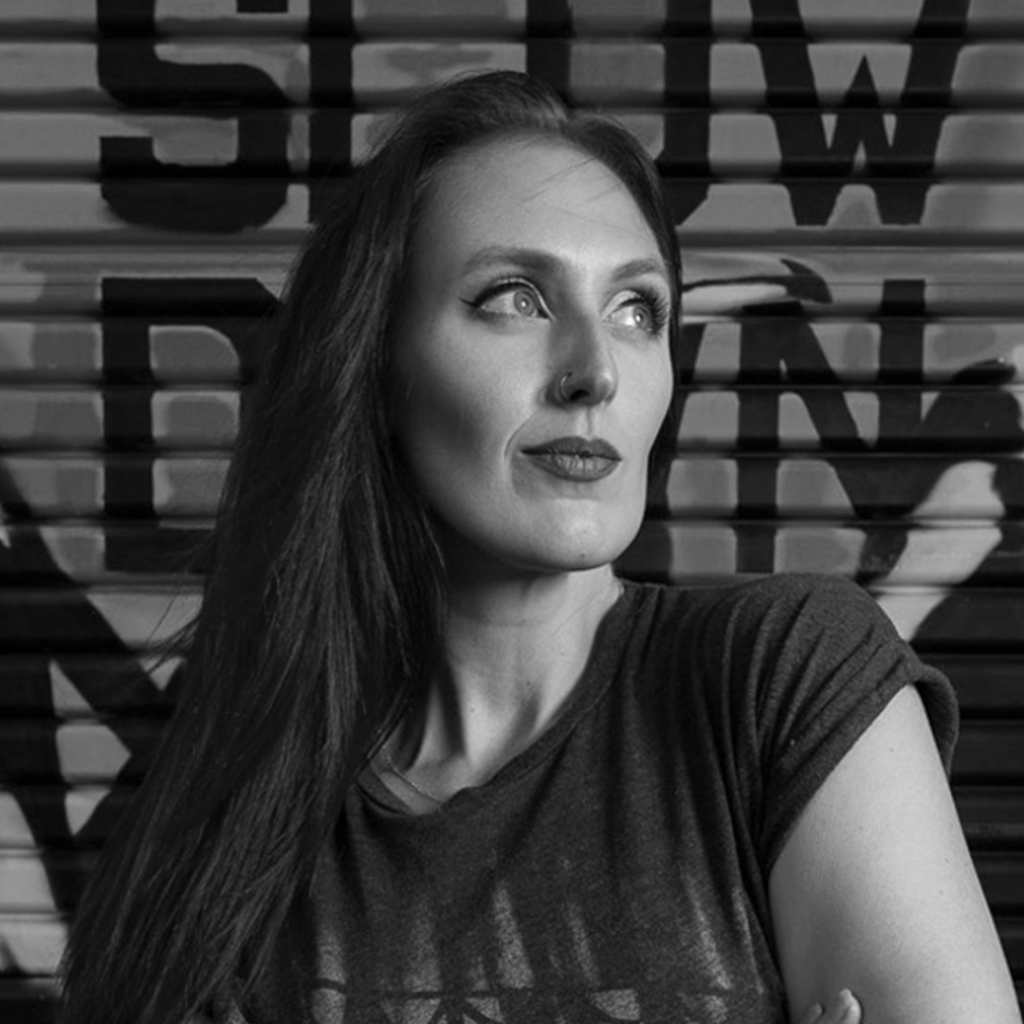
Ash Myburgh
I’m Ash, and I am a Creative Lead and Digital Marketing Officer, and a sporadic podcaster. I am currently working in the comms team at the InsideOut Institute for Eating Disorders.
I’m a brand geek with a particular interest in the intersection of brand storytelling, innovation and human behaviour. Essentially, I like understanding why humans do what they do and enjoy finding cool ways to put brands at the centre of that.
After working as an art director and creative in the advertising industry for nearly a decade, I recently transitioned across to the brand and digital marketing space, where I am flexing my creative problem-solving muscles in the medical research field.
On the side, I host a mental health and eating disorder recovery podcast, The Recovery Feed, where I highlight the power of lived experience, something that I value in my personal and professional life.
Career & Background
What inspired you to do what you are doing now?
I stumbled into advertising by accident. While I started out as a graphic designer, I always felt my brain naturally gravitated towards bigger ideas and concepts. Someone else must have noticed that too, because I eventually landed a role as an Art Director at Ogilvy Australia, which felt like a much more natural fit.
After a decade in advertising, and experiencing the more recent volatility of the industry, I started craving more stability and a chance to use my creative skills in a more meaningful way. I’ve long been an advocate for eating disorder awareness, and that, combined with an opportunity to move into the brand and marketing space, led to my most recent career change.
But I’ve never lost my deep curiosity about why—why people do what they do, think the way they think, and why things are the way they are. I’m a creative problem solver at heart, and as long as I have the opportunity to contribute to ideas that have a meaningful impact on people, I’m less concerned with where or how I do it.
Could you tell us a bit about your professional background?
I’m formally trained as a graphic designer, where I focused on visual communication and photography, but that morphed quickly into a career as an art director and creative in the advertising industry. I worked in ad-land for ten years, working on brands such as IBM, KFC, American Express, Uber Eats, Hyundai and ALDI. I have worked on big glossy TV ads, created apps, ideated and executed experiential tech activations, designed many an eDM, and I even redesigned the KFC store uniforms. I’ve also had a lot of fun.
I’m a bit of a magpie when it comes to trying new skills (you can probably blame my ADHD for that) and regularly dabble in writing, video production, podcasting, photography and social content.
Never shying away from an opportunity to enter a career evolution, I recently moved into a digital marketing role in the medical research field, working for the InsideOut Institute; a long-time passion of mine.
Your favourite food for thought
Books
– Junior: Writing Your Way Ahead In Advertising by Thomas Kemeny
– The Resilience Myth by Soraya Chemaly
– Girl on Girl: How Pop Culture Turned a Generation of Women Against Themselves – Sophie Gilbert
Podcasts / Thought Leaders
– A Bit Fruity, hosted by Matt Bernstein
– Jameela Jamil
– Hannah Fergason at Cheek Media and host of Big Small Talk
– The Recovery Feed – If I was going to shameless plug my podcast anywhere, this felt like the best place to do it…
What drives and inspires you
What are your core values?
Authenticity, Compassion, Integrity, Perseverance, Vulnerability
Who is your biggest inspiration and why?
Creativity is multi-faceted and needs multiple perspectives to grow and evolve. We can’t expect to get everything we need from one person, nor should we. So when I look for inspiration, I look at who’s the ‘best in show’ based on the skill I need.
When I need tenacity and conviction, I look to Professor Sarah Maguire.
When I need killer instinct AND emotional intelligence, I look to Jenny Mak, creative partner at jnr.
When I need a guide for the type of mentor I want to be, I call on Jon Austin, co-founder of Supermassive.
When I need a reminder of the power of change, I look to Cindy Gallop.
For the foundations, it’s Sir John Haggerty.
When I need a north star for creative expression, I analyse the work of artists Yayoi Kusama and Rafael Lozano-Hemmer.
When I need a masterclass in using words as a weapon, I study wrestler CM Punk.
When I need a second opinion, I ask the creatives I mentor – they can often teach me a lot more than I can teach them.
And when I need belief in myself, I look to the kind words and recognition bestowed on me by my peers, colleagues and, juries over the years. If I doubt myself, it means that I’m doubting all of them too. And I have far too much respect for them to allow that.
You as a Mentor
Why have you decided to become a mentor?
When entering the advertising industry as a young art director, I sought a female creative role model whose position I could aspire to. But for the majority of my early career, that elusive art-based female creative director was noticeably absent. I initially believed that art directors weren’t destined to be creative directors, let alone could rise to even higher ranks. But there was no shortage of male art-based creative directors. Then it clicked – it’s not that female art directors couldn’t make it to the top, they were being overlooked.
I realised if I wanted to find the art-based female leader I craved, I needed to become her. So here I am, trying to become her.
I’m committed to helping shape the industry into a more equitable, diverse place for the next generation of advertising creatives, and being an Assisterhood mentor is a real and tangible way of honouring that commitment.
I want to not only offer an opportunity to help other women in the industry but to learn from so many incredible women who will in turn enrich my creative practice. By leading and teaching, I know that I will be doing a lot if not most of the learning myself.
What are the top skills or qualities you bring to mentoring?
Collaborative, Empathic, Generous with time, Non-judgemental, Nurturing
Ready to apply?
The best time is right now. Take a chance – you never know where an Assisterhood mentor can take you.